Monday, 17 September 2012

New website launch

We have launched a new site recently, so this blog is no longer up to date.
Please visit the new site here:


Wednesday, 11 July 2012

American speaker on making cows comfortable on sand systems

Last we we enjoyed a great open evening with Matt Thiel from Wisconsin, America.

Matt works for L&L Inc. and specialises in dairy housing and building design. Matt also spends a lot of time giving seminars and leading lectures to colleges and farming groups around USA.


Matt spoke at an open evening near Tewkesbury, about sand cubicles, Pack Mat and concentrating on making cows comfortable and designing cubicles to fit the cows.


We also spent time on several UK farms, looking at systems to improve comfort and manageability of sand systems.


Friday, 18 May 2012

New Cowcoon - the Hybrid Cow Stall

Launched May 2012 at the Balmoral show in Northern Ireland, the revolutionary Cowcoon cow cubicles. This is a hybrid cow stall. The Cowcoon hybrid stall offers stability, comfort and control, in the gentlest of manners.

A polyethylene tube on the lower body of the stall partition guides the cow, offering ductile support to her body thus hugging the cow, ensuring that she rests securely, comfortably and without the risk of bruising or swelling commonly associated with all steel partitions.

  • Lower polyethylene tube removes corrosion
  • Acts as a shock absorber alleviating stress on the front mountings and the cow
  • Reduced load from 29Kn to 12.5Kn (over 50%)


Monday, 30 April 2012

Milk Robot planning and layouts

Nice article by the Farmers Guardian, about what Wilson Agriculture have
to say about housing cows in milk robot units:


Planning is key to robot success

THE issues of building planning and adaptation, lameness prevention and the importance of water were all topics for discussion at last week’s ‘planning for robots’ seminar held in Gloucestershire.
If you are looking to expand or develop a dairy business using robotic milking systems, considerable thought needs to go into the planning or adaptation of buildings for this purpose.
This came from Ivor Davey, sales development manager at Wilson Agriculture, who said there were four steps in the decision making process.
He said: “Firstly you need to think about the building layout and long-term plans, then look at building design, cubicle design and then the beds.”
Mr Davey said robotic milking should be part of a ‘long-term plan’ and the options for development should be considered first to address whether there is further room to expand cow and robot numbers if the need is there.

Sight

In terms of designing the building, Mr Davey said it was important for every cow in the shed to be able to see the robot from wherever it was.
“In particular, end wall panels need to be kept small so cows can see the robots from anywhere in the building.
“Different companies have different theories on how to manage cow flow but, in general, you want to discourage the cows from standing where they should not be standing.
“So do not put rubber matting in front of the robot as you want to ensure free access and good cow flow.”
Mr Davey added it was important to achieve ‘natural cow behaviour’ and this was down to good building and cubicle design.
“By achieving this, cows are in good condition when they reach the robot and they spend most of their time lying down to produce good milk yields. When the cubicles are working, the passageways should be empty.”

Tips on planning a robotic dairy

  • Each cow needs 8-8.5sq.m of space, which includes cubicles, passages, feeding and robot area
  • Space between last cubicle and the robot needs to be a minimum of 5 metres (16.5 ft)
  • Feed space of around 60cm (2ft) per cow is the target
  • Target of 10cm (4in) water trough space per cow
  • The ideal temperature for a cow is 4 degC so good ventilation required


Friday, 30 March 2012

Gel Mattress vs Pasture Mat and Premium Pad

Here is a new time lapse video from Wilson Agriculture.

This was filmed on 27th March 2012
6am to 7am
1 second = 1 minute

On the LEFT are Pasture Mat with Premium Pad foam
On the RIGHT is the new Gel Mattresses


These are all at 4ft centers and are our C50 Post Mounted cubicles.
These are 10ft bed lengths.


Tuesday, 6 March 2012

Wilson Agri robot installation

Here is a video discussing a robot installation with all of our 
Cubicles, Pasture Mats and pillows.
This was installed in 2009.

Friday, 24 February 2012

Nice robot unit in Somerset, UK


These all have Pasture Mat mattresses with Premium Pad foam,
moovApillow brisket barrier and C50 floor mounted cubicles.

Friday, 27 January 2012


New time lapse recording from 12th January 2012.

Interesting to watch the cows during different 1 hour long periods through out the day.


Filmed 12th January 2012 - Norfolk -UK

116 cow building with 18ft doubles and 9ft singles on 3ft9inch centers. These are all floor mounted C50 cubicles with Pasture Mat mattresses, Premium Pad and Poly Pillows. Also Wilson Ag wall mounted tip over water troughs.

Timelapse: 1 second = 1 minute

Filmed:
4am to 5am
9am to 10am
2pm to 3pm
7pm to 8pm
0am to 1am on 13th.

This is an attempt to show consistent cow behaviour throughout the day. Even at night the cows use the cubicles really well. This building is providing a high level of comfort and is a good environment for the dairy herd.


Wednesday, 18 January 2012

Wilson Ag - Now on Google +

Stay connected with Wilson Agriculture 
by joining us on google +


Other social media links:

youtube   YouTube
flickr   Flickr

Friday, 16 December 2011

600 cow building

This is a 600 cow building installed in Lancashire in 2011.
These are Wilson Agriculture C50 post mounted cubicles
on a deep bedded system.


186 cow milk robot unit

This unit was installed in North Yorkshire, UK.  
It is full slatted with 3 milk robots.


Monday, 21 November 2011

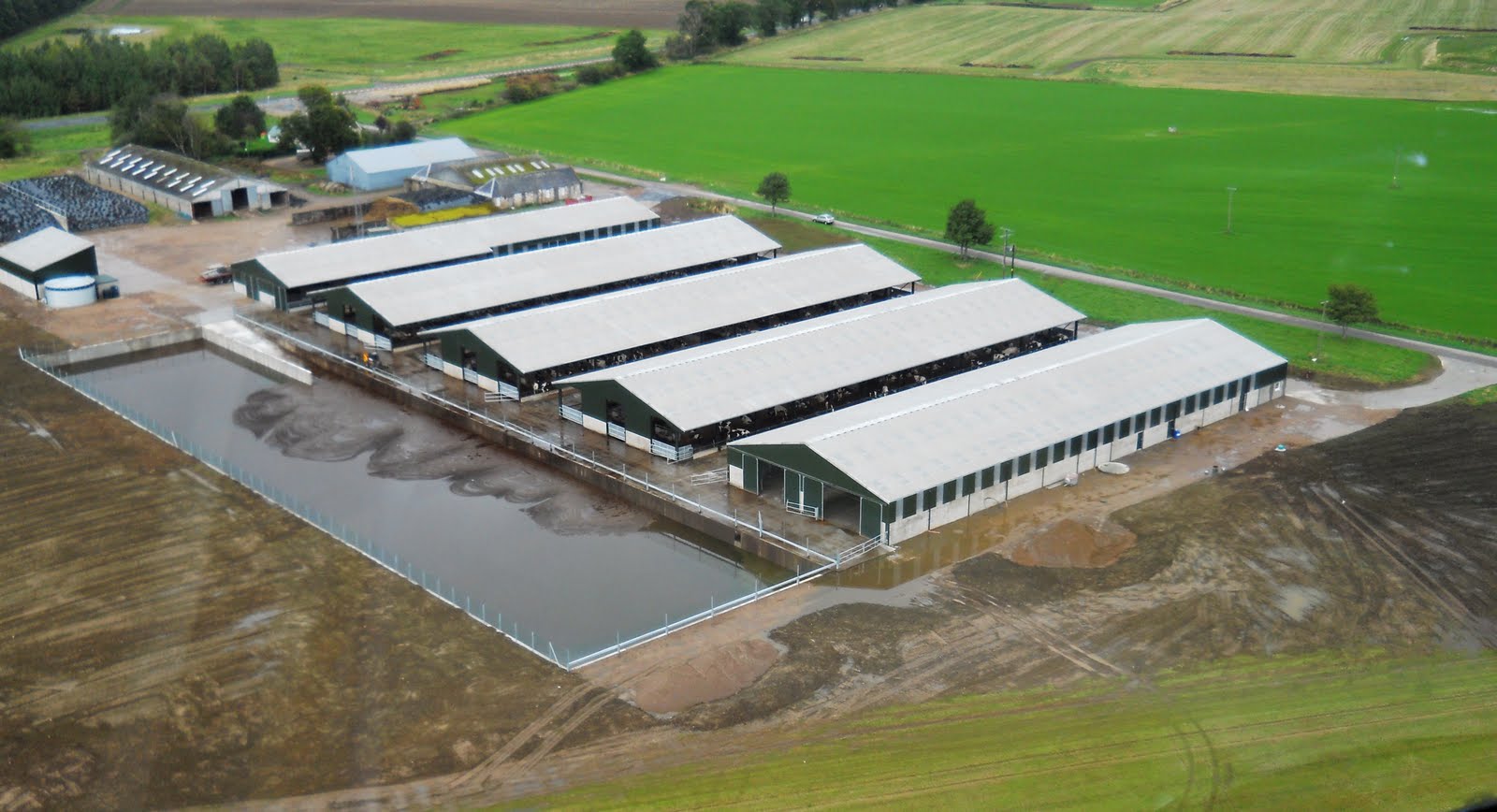
Scottish 640 cow unit


Here are some photos of a new 640 cow unit in North Scotland which we worked
on with BHC Ltd www.bhc.ltd.uk

This has been a very successful build with detailed planning and
a very happy client, with a very nice new dairy unit.


These are all 5m head to head cubicles with post mounted C50 cubicles on sand beds.
We have used the MoovApillow as brisket barriers throughout.


Friday, 21 October 2011

Recent installation - 270 cow building

Here is a UK installation of 270 post Mounted C50 cubicles, complete with
Pasture Mat mattresses, Premium Pad foam and MoovApillows.

These are installed on 5m double rows and 2.75m single rows.


ZigZag rubber


New to our product range for 2011 is our ZigZag Rubber Belting.

ZigZag rubber belting is a new product designed for dairy housing floors. This is a 20mm rubber with heavy steel cables throughout. This means it will not stretch and hugs the floor.


Benefits of ZigZag rubber belting:
  • Major Reduction in foot and leg lesions and soreness
  • Reduces Fatigue from standing on concrete
  • Increases cow performance and longevity
  • Used at the feed barrier, cows will spend more time eating, resulting in higher milk production
  • Reduced hoof trimming and doctoring


Pictures of a recent installation in Shropshire, UK:


Tuesday, 30 August 2011

Have you thought about lighting lately?


Wilson Agriculture are proud to announce our new lighting system. We can now offer a specialist light designed for the dairy building.

We have called this AgriLux and are offering customer full lux plans and calculations for your housing.

How lighting effects dairy cow housing

Key points:


According to research, optimum photoperiod will increase milk yield by 6-10% on average

  • Eventually, cows increase feed intake to support the risen milk yield.
  • No effect on protein or solids content while only a very limited decrease in fat content.
  • The increase in milk yield amply compensates the effects on fat and feed intake.
Why is there an effect?

Light reception occurs in the eyes retina. Light inhibits an enzyme used in melatonin synthesis in the pineal gland. Therefore, as photoperiod increases, the duration of high levels of melatonin in the blood decreases. Melatonin concentration in the blood influences the concentration of some hormones in the blood, for example, insulin-like growth factor-1 (IGF-1). Scientists believe changes in the concentration of IGF-1 play a role in the effect of photoperiod on milk production, as IGF-1 has been shown to increase milk yield.


Why is Wilson Agriculture concerned with this?

· The use of light is cost-effective and has a very short pay-back time.

· Very simple to carry out.

· No extra labor required.

· Improved production and therefore margins on the units we work with.

Requirements for lighting:

For milking cows, calves and heifers

  • 16 hour long day photo period; 150-200
  • lx at the eye level of the cow
  • 8 hour of uninterrupted darkness means less than 5 lx* at the eye level of the cow

Dry period

  • 16 hours long at less than 5 lx*.
  • 8 hours of 150-200 lx

[this will reset the long-day photo period and improve the immunity system]


*5lx means that you can still see a printed text.

Red night lights may be used to facilitate cow movement and observation during darkness. The intensity of red light has no (or only minor) effects on the cows’ perception of darkness, and thus melatonin secretion.

There should be no brighter lights in any part of the barn and cows need 2-4 weeks on average to adjust.


Please contact us for full information and plans like this:


Tuesday, 9 August 2011

Ventilation in Dairy Buildings

This article was published in Farmers Weekly back in October 2010. Now is the time to consider ventilation so take a look and let Wilson Agriculture help you get ready for this winter:


Many farmers have the potential to reduce mastitis incidence by tackling ventilation in existing cattle buildings, according to Jamie Robertson, Livestock Management Systems. "Ventilation can directly influence the survival rates of E coli and Strep uberis. For example, when bacteria is aerosolised - as with airflow across a straw bed or cubicle - loss of water molecules by evaporation may cause loss of microbial activity."

Fresh air also influences survival rates, with E coli demonstrating a 97% mortality rate after being exposed to fresh air for 90 minutes.

However, according to Mr Robertson, half of all buildings are inadequately ventilated for the animals housed in them. "People often emphasise nutrition and stocking rate in dry cow sheds, but too often I see these animals housed in grotty buildings.

"Problems are rarely a result of inappropriate stocking density, but more because of insufficient removal of vast quantities of heat and moisture," he said.

When ventilation is not up to scratch, moisture is unable to escape, landing on beds and creating an ideal environment for mastitis causing bacteria.

"We need to get the environment working against pathogens and for animals. A common misconception is that, because a building has some vents in the roof, it will ventilate adequately. But a building with only 50% of the required outlet area will only provide ventilation for 50% of stock housed.

"When air speed drops to calm, the only way fresh air can enter the building is when air leaves the building. With inadequate outlets, there will be an increase in heat and moisture."

And Mr Robertson said that any opposition to putting holes in the roof is misplaced as concerns over water entering the building can be managed by using a covered open ridge. Most rain ingress will also be prevented by the warm air leaving the building.

"Ventilation and stack effect requires a basic matching of inlet and outlet areas to be able to work to maximum efficiency. The relationship between inlet and outlet areas is building specific. But at minimum, an inlet to outlet ratio of 2:1 and typically 4:1 is recommended

Friday, 1 July 2011

Gold Cup winners open Day

Wilson Agriculture were proud to attend the RABDF Gold Cup winners open day on Wednesday 29th June. This was held at Kingspool Farm, Iron Acton, Bristol.

Congratulations to Chris and Mike King and their team.


We are please to supply all the cubicles and self locking feed barriers for this award winning unit.


Blog Archive

Show/Hide Navigation