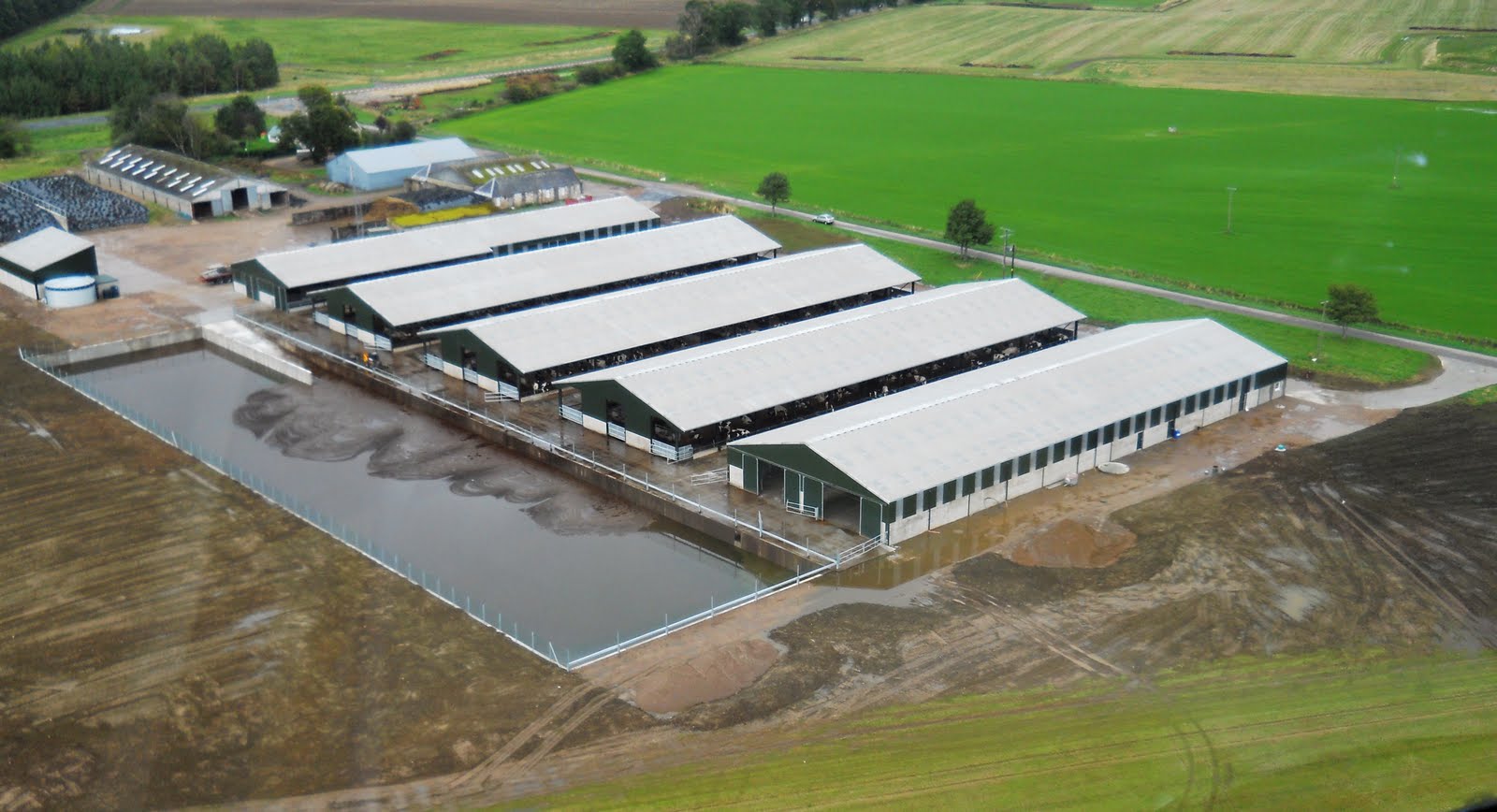
This is a 600 cow building installed in Lancashire in 2011.
These are Wilson Agriculture C50 post mounted cubicles
on a deep bedded system.




Key points:
| According to research, optimum photoperiod will increase milk yield by 6-10% on average |
Light reception occurs in the eyes retina. Light inhibits an enzyme used in melatonin synthesis in the pineal gland. Therefore, as photoperiod increases, the duration of high levels of melatonin in the blood decreases. Melatonin concentration in the blood influences the concentration of some hormones in the blood, for example, insulin-like growth factor-1 (IGF-1). Scientists believe changes in the concentration of IGF-1 play a role in the effect of photoperiod on milk production, as IGF-1 has been shown to increase milk yield.
Why is Wilson Agriculture concerned with this?
· The use of light is cost-effective and has a very short pay-back time.
· Very simple to carry out.
· No extra labor required.
· Improved production and therefore margins on the units we work with.
| Requirements for lighting: For milking cows, calves and heifers
Dry period
[this will reset the long-day photo period and improve the immunity system] |
*5lx means that you can still see a printed text.
Red night lights may be used to facilitate cow movement and observation during darkness. The intensity of red light has no (or only minor) effects on the cows’ perception of darkness, and thus melatonin secretion.
There should be no brighter lights in any part of the barn and cows need 2-4 weeks on average to adjust.
Please contact us for full information and plans like this:

This article was published in Farmers Weekly back in October 2010. Now is the time to consider ventilation so take a look and let Wilson Agriculture help you get ready for this winter:
Many farmers have the potential to reduce mastitis incidence by tackling ventilation in existing cattle buildings, according to Jamie Robertson, Livestock Management Systems. "Ventilation can directly influence the survival rates of E coli and Strep uberis. For example, when bacteria is aerosolised - as with airflow across a straw bed or cubicle - loss of water molecules by evaporation may cause loss of microbial activity."
Fresh air also influences survival rates, with E coli demonstrating a 97% mortality rate after being exposed to fresh air for 90 minutes.
However, according to Mr Robertson, half of all buildings are inadequately ventilated for the animals housed in them. "People often emphasise nutrition and stocking rate in dry cow sheds, but too often I see these animals housed in grotty buildings.
"Problems are rarely a result of inappropriate stocking density, but more because of insufficient removal of vast quantities of heat and moisture," he said.
When ventilation is not up to scratch, moisture is unable to escape, landing on beds and creating an ideal environment for mastitis causing bacteria.
"We need to get the environment working against pathogens and for animals. A common misconception is that, because a building has some vents in the roof, it will ventilate adequately. But a building with only 50% of the required outlet area will only provide ventilation for 50% of stock housed.
"When air speed drops to calm, the only way fresh air can enter the building is when air leaves the building. With inadequate outlets, there will be an increase in heat and moisture."
And Mr Robertson said that any opposition to putting holes in the roof is misplaced as concerns over water entering the building can be managed by using a covered open ridge. Most rain ingress will also be prevented by the warm air leaving the building.
"Ventilation and stack effect requires a basic matching of inlet and outlet areas to be able to work to maximum efficiency. The relationship between inlet and outlet areas is building specific. But at minimum, an inlet to outlet ratio of 2:1 and typically 4:1 is recommended


Talking to a paying audience on London's Southbank on Tuesday, the Somerset farmer (and Farmers Weekly subscriber) described how the festival has to be meticulously planned around his dairy herd.
Four weeks before 140,000 festival-goers descend on the 364ha (900-acre) site, his cows are brought into their winter housing - dubbed the "Mootel" - for the duration of the festival. Moving them early, Mr Eavis explained, is a necessary precaution to minimise the risk of E coli."
Here are some pictures of his Mootel:


 Posts
All Comments
Posts
All Comments


